Srini Chandrasekharan


Category: Newsletter

  • The Apocalypse Gap

    The Apocalypse Gap

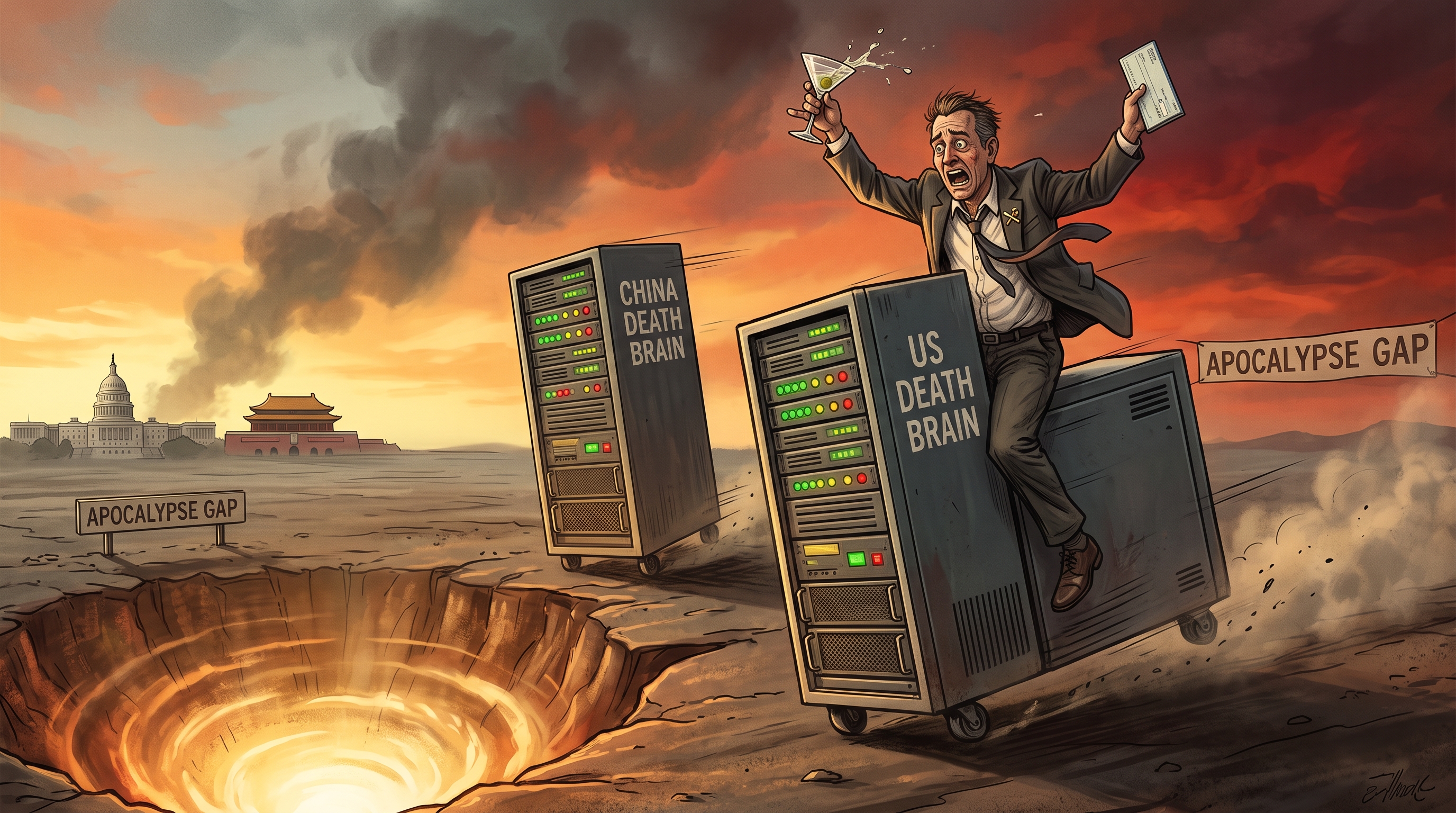
    I ran into a friend at a Palo Alto bar the other day. Let’s call him Horace. Horace is a lobbyist for the technology industry at the Pentagon, and he was staring at his martini with the enthusiasm of a man who had just found out the world is ending.

    “What’s wrong, Horace?” I asked.

    “It’s the computer boys out here in Silicon Valley,” he sighed. “They’ve gone and built a Death Brain that is going to wipe out humanity, and now they want Washington to do something about it.”

    “That sounds quite serious,” I said. “Are you sure?”

    “Absolutely. One of their top researchers, a young fella named Jacob, walked away from his unvested stock options just to warn everybody. In this town, we understand giving up your principles, but giving up your stock options? That’s like a Labrador retriever running away from a fallen hot dog on the street.”

    “Well, what does the Death Brain do?”

    “Right now, it just answers emails and writes bad poetry,” Horace said. “But the companies admitted that they have had to stop the computers from designing biological weapons and missiles for no apparent reason. One of their CEOs, a chap named Dario, wrote a massive essay practically begging the government to force him to stop spending trillions of dollars on building it.”

    “That should be easy enough,” I said. “Congress loves stopping things.”

    “It’s not that simple,” Horace groaned. “You see, there’s a catch. We asked the Chinese if they would also hit the brakes on their humanity-destroying Death Brain. And Beijing said, ‘No thanks, losers. We plan to keep building.’”

    “So, the Chinese are ignoring the warnings?”

    “Exactly. And as any good geopolitical strategist will tell you, we cannot afford an Apocalypse Gap. If China is going to build a machine that destroys the world, America has to do it first, just to preserve our competitive edge.”

    “It makes perfect sense when you put it that way,” I noted.

    “Donald Trump certainly agrees,” Horace said, signaling the waiter for another drink. “A couple of years ago, he was terrified the computers were going to trick us into a nuclear war and the robots were going to murder us in our beds. Apparently, he has had a change of heart.”

    “He’s not worried about the Death Brain anymore?”

    “Not at all. In fact, he declared the whole AI Apocalypse thing a hoax. The other day, a fellow was giving a big speech about computer chips on a stage, and Trump called him on speakerphone right in the middle of it. He told the crowd that the robots aren’t taking over. He said the people warning about doomsday are just playing into China’s hands.”

    “So, what is his plan?”

    “To sprint to the finish line,” Horace said. “He announced that whoever wins the Death Brain race, wins the whole thing. He said the only safety guardrail the world needs is a very smart, high-IQ president.”

    “Well, it’s too bad Obama can’t run anymore,” I said. “So, what is your lobbying strategy going to be now?”

    Horace sighed. “I’m heading up to Capitol Hill to make sure we don’t slow down the computer labs for a single second. If humanity is going to be wiped out by a giant calculator, we have to make sure it’s an American one. But I am also hearing that Congress wants to spend fifty billion dollars to ensure the computers don’t wipe out the human race.”

    “That seems like a prudent investment,” I said. “You can never be too careful with doomsday.”

    “It’s a complete waste of taxpayer money,” Horace replied, dropping his fork. “Why should Washington pay a machine to do a job we are perfectly capable of doing ourselves?”

    “I hadn’t thought of it that way,” I admitted.

    “Look at our track record,” Horace said proudly. “We have enough nuclear warheads parked in silos to turn the entire planet into a charcoal briquette by next Tuesday. And we built those using slide rules and rotary phones. We didn’t need a super-smart algorithm to cause mutually assured destruction. Just good old-fashioned human paranoia.”

    “So, we don’t need a Death Brain to kill ourselves?”

    “Exactly. It’s an insult to our own incompetence. We have spent centuries polluting the oceans, melting the ice caps, and fighting trillion-dollar wars over whose grandfather owned which square foot of sand. Now, some Silicon Valley calculator thinks it can waltz in and destroy the globe in an afternoon?”

    “It hardly seems fair,” I agreed. “What do you plan to tell the appropriations committee?”

    “I will tell them we have to protect American jobs,” Horace said, signing the check. “If the human race is going to be driven into extinction, it should be done the traditional way. By hardworking politicians and generals, not outsourced to a glorified thermostat.”

  • The Age of Millionaires and Status-Death

    The Age of Millionaires and Status-Death

    Closing out my Croatia travel notes:

    Dubrovnik is not memorable in the way great cities like Rome and Istanbul are. But it’s every bit as beautiful in the way beautiful cities like San Francisco and Lisbon are. The “city” of 40,000 is defined by its Old Town, a sunlit quarter encircled by massive stone ramparts on the edge of the Adriatic, now filled with shops, restaurants, and tour groups. First built by Greeks, later settled by Slavs, and developed by the Venetians, Dubrovnik never truly belonged to anyone in particular. Defended across centuries by mercenaries loyal only to the highest bidder, it traded hands repeatedly until history largely passed it by. Its modern resurrection came when an HBO crew arrived, filling the historical vacuum with the mythical lore of King’s Landing. The city was suddenly conferred global prestige overnight.

    There is a certain manufactured element to Dubrovnik’s status and its newfound wealth and that got me thinking about a couple of articles I read recently, one in The Wall Street Journal and another in The Economist.


    The Age of Millionaires

    America has three million individuals worth at least a million dollars each, and collectively worth 65 trillion dollars. They are not your celebrity founders. Rather, they are your neighborhood veterinarian who expanded his office to a regional network. Or an HVAC contractor whose ubiquitous trucks you see everywhere. Ordinary people whose unglamorous businesses are woven into the fabric of our daily lives. The Wall Street Journal has dubbed this “the Age of Millionaires.” There have never been more of them in America. The number of Americans worth more than a hundred million dollars has quadrupled in the last 25 years, far more than the handful of billionaires we hear about daily. They are the real rich in America. And yet, the American dream is fading. Or at least the faith in it is. Many doubt that the next generation will achieve lives better than their parents.

    The secret to becoming rich in America has always been hidden in plain sight: Own a business. The correlation between elite SAT scores and wealth has been weak. Amid the panic over what AI will automate next, this reality may offer a clue: find an unglamorous business and drag it into the modern era. Whatever software gets built, we will still need seamless gutters, ambulances, plumbing, and logistics. Things will still need to be transported, installed, and repaired. AI may replace knowledge workers, but it will enrich the people who own the machines and the infrastructure.


    Status-Death

    If this is the Age of Millionaires, it is also the age of “Status Death,” per The Economist. If you are a rising star on Wall Street, you may be suddenly dismayed to find your peers making triple your carry in frontier AI labs. The rat race has reached an unbearable pitch. The biggest winners of the knowledge economy are feeling abruptly “status-mugged.” They fear they are sinking fast. Universities and newspapers once conferred prestige. They no longer do so. Yet, the modern worker is hopelessly status-obsessed. Even bosses of giant companies find time to post on LinkedIn and X. Literally everyone is obsessed with their relative standing, not just in their firm, but in the world at large. An intricate currency of fictitious titles has flooded the market. Banks are the worst culprits, inflating fragile egos by minting hundreds of “Managing Directors” and “Vice Chairmen.”

    Silicon Valley once prided itself on being egalitarian and classless. Today, is there an industry whose workers fear status-death more? A handful of scruffy software coders with unkempt hair got lucky and find themselves at the epicenter ironically dubbed “The Frontier,” claiming god-like powers, and others left on the periphery, fearful of the snake swallowing its own tail.


    Misunderstanding the power of status has got to rank as the AI-tech-bros’ biggest failure so far. We don’t fear AI killing us all. An earthquake or a tsunami could do that to us in an instant. We fear the demotion to irrelevance. A species wide status-death in which we are relegated to lower than the machines we operate. That wound stings far deeper.

    I grew up in 1970s India, where status wasn’t measured by where you studied or how much money you had. Sure, those were nice but real status was measured by who you KNEW. It was the logical outcome of a corrupt system where talent and merit meant little. It’s happening here in America in 2026. President Trump is the grim reaper of status-death. He has attacked individuals, universities, media and other institutions into oblivion. And he has replaced old status with a new one: access to the White House. The logic of corruption is closely tied to the logic of status-death. The former owes it strength to the latter.

    Maybe this is just a spur to greater things. The loss of old status often forces us to build something new. There is a nauseating sense today that we have arrived late to a party that is winding down. Maybe that’s the push we need to start our own.

    It is, as ever, the best of times. And arguably the worst of times.

    Have a good week ahead.

  • Travelogue: Split, Croatia (Part 2)

    Travelogue: Split, Croatia (Part 2)

    It’s five in the morning, and I’m standing outside the hotel, chatting with Luka, the man in charge of the front desk. I think he’s in his late 30s, but I don’t ask. He’s been working the late shift, and he’s chatty. He used to live in Zagreb (“much cheaper than Split”) and worked in a hospital. “I’m an engineer. Healthcare not doing so well in Croatia now.” And then life happened, and he moved here to Split, where he works three jobs. One of them is as a security guard in a store for one of the top electronics chains in Croatia.

    We talk about the wars. The ones in Ukraine and Iran. “We know war in Croatia,” Luka speaks in a soft and measured voice. “Wars are not good, except for some people.”

    Our conversation shifts to AI. “It’s good in some things. Mainly bad. It’s going in the wrong direction,” he says, taking a deep drag on his cigarette and exhaling slowly into the pre-dawn air. “They’re using robots to replace me. I have three kids. I work three jobs. I don’t have any savings. I have given up. Maybe I’ll move back to Zagreb.”

    Later, Paul is guiding us around Fort Klis and Salona, the old capital of the Roman province. He’s a tall, strapping young lad in his twenties with an upbeat take. “My grandfather left for Germany. In the old days, we had communism. It was a crime to start a business. Now I can start my own business. Capitalism is good.” I listen to him in silence. He’s new to the religion and I can appreciate his zeal.

    We have a spirited conversation about the Catholicism of Croatia. In the 11th century, the Slavs — the peoples of Serbia, Croatia, Bosnia, and other small kingdoms on this side of the Adriatic — made some choices. Some like Serbia went with the Eastern Orthodox church. Others, like Croatia, went with the Pope and Roman Catholicism. Later, Bosnia turned to Islam under Ottoman influence. Centuries later, these choices would reverberate after Marshal Tito died and the country once known as Yugoslavia disintegrated. The Croats and the Bosniaks bore the brunt of the sectarian warfare that tore apart peoples once united by a common linguistic and cultural heritage.

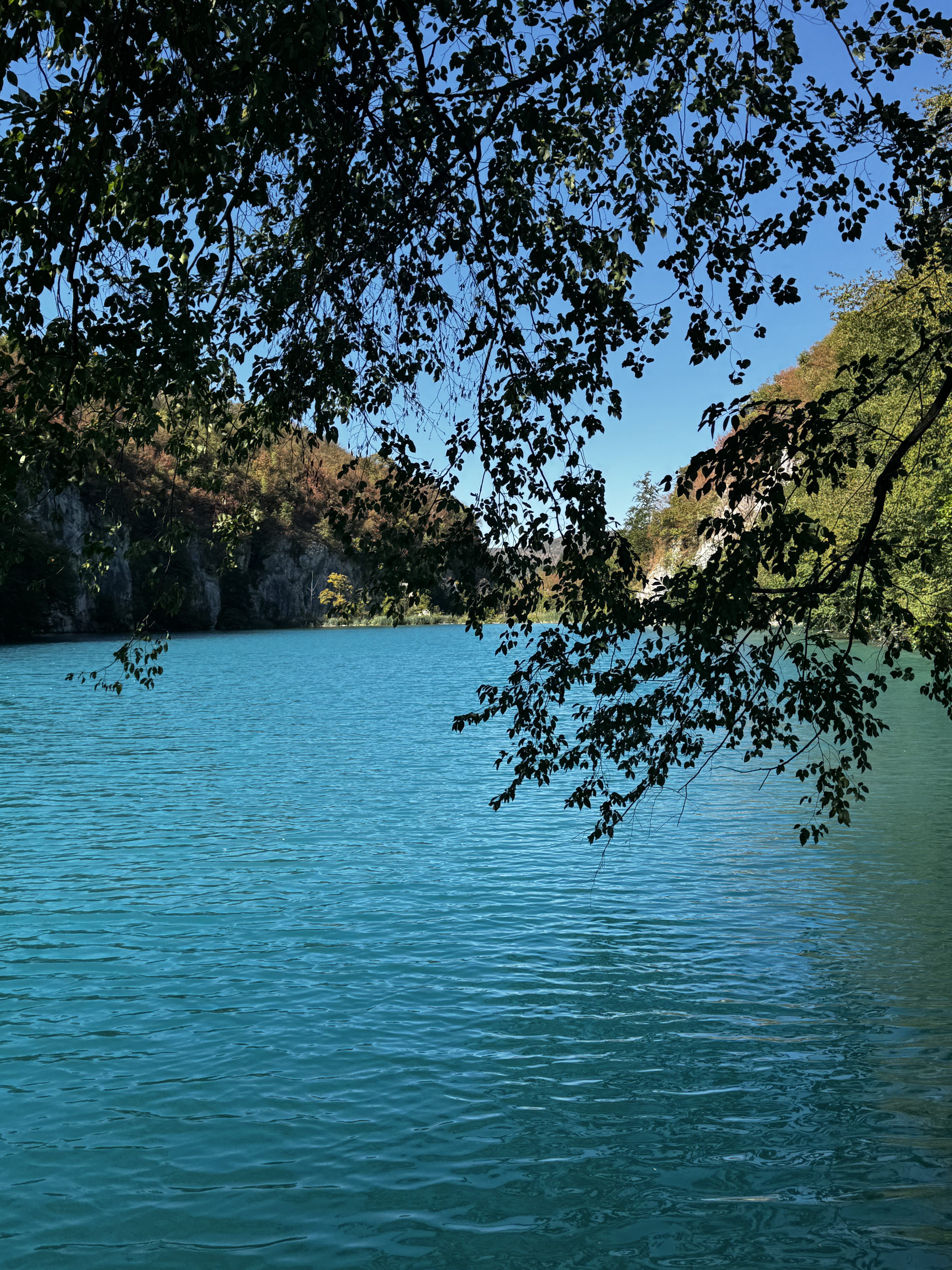
    At one point, Paul asks me a question. What are a bunch of brown people from California doing in a place like this? Why Croatia? Well, he doesn’t quite phrase it that way. And he knows the answer already: Game of Thrones. No one has done more for the Croatian economy than HBO. Split and Dubrovnik are sites of the most iconic scenes from George R.R. Martin’s gritty political thriller. Millions from all over the world, like me, come here to walk the street alleys, the dungeons, and the ramparts. It’s their homage to one of the most memorable television dramas of our time. They come for the show and stay for the other things Croatia has to offer. Like Plitvice National Park, which is stunning. And Trogir, a chill beachside town.

    Paul is right, of course. Capitalism unleashes all the right kinds of creative spirits. I should know. I benefited from it. Capitalism is good. Until it stops working. If we compared the best versions of capitalism and socialism, both functioning at their peak, capitalism would win by a long mile. But when you compare their worst versions, both dysfunctional and dystopian, I can see why socialism starts to look more attractive to folks like Luka. To everything there is a season.

    First it was Covid. Then, the wars. Now, AI. It’s taking a collective toll on us, not just financially but mentally. I think we are psychologically broken. There’s a feeling of helplessness and resignation in the air. I hate to sound like a broken record, but this story is repeating itself all over the world. The young are giving up. I heard this in Seville from a young woman, our tour guide. After finishing college, she struggled to find a job and finally took to tourism (“I needn’t have attended college for this.”). I’ve heard this in Lisbon, Rome, Chennai, and every other metropolitan city in the last few years.

    The winds of change are blowing around the world. I felt it yesterday as I stood on Marjan Hill, staring out at the Adriatic.

    My mind drifts back to the early morning darkness. The first ray of sun emerges faintly. We stand in silence for a few minutes.

    Luka looks like a capable guy. He’ll figure it out, I tell myself.

    “It will be what it will be,” Luka breaks the silence as we go back inside.

    Amen.

  • Travelogue – Split, Croatia

    Travelogue – Split, Croatia

    Diocletian isn’t a name you come across every day. I’m here to tell you about him. He ruled the Roman Empire for twenty-one years during an especially troubled period. The man was remarkable in a few ways. Born into an ordinary family in Dalmatia (modern Croatia), he joined the Roman army as a foot soldier and grew through the ranks through sheer competence. In 284 AD, when the Emperor was found dead, the army proclaimed Diocletian emperor. A general, Aper, was accused of regicide. Diocletian stepped before the army assembly and dramatically ran Aper through with his sword to claim power.

    Diocletian split the governance of the empire into “the rule of the Four.” He appointed another Emperor and two “junior Caesars.” He cracked down on the growing Christianity movement, which he believed to be a threat. That was the last time a Caesar tried that. Most of his time though, Diocletian spent on battling a raging inflation. His edict on price controls had mixed results. In 305 AD, he abruptly and voluntarily renounced power and retired to his part palace, part garrison in Split, Croatia. He spent his remaining years growing, of all things, cabbages. I guess he had had his fill of Jesus and inflation.

    As we make our way from the airport to hotel, our taxi driver (a native Croat) complains about the same problem: inflation. Ever since adopting the Euro in 2023, (they joined the EU in 2013), prices have apparently skyrocketed. “If you don’t already have a flat, you’re nothing ..” his voice trails off as he stares stoically ahead at the road. Who’s buying the houses? The English? The Russians? I ask. He instinctively recoils in indignation when I mention the Russians. “In Serbia, they are friendly with Russians. Not in Croatia. Here Ukrainians. They drive really nice cars,” he says, part enviously, part admiringly. The foreigners are buying up the coast and the locals are being locked out. This story has been playing out all over Europe.

    The woman who checks us in at the hotel reminds us that Slavija Hotel “is the oldest” in town, welcoming travelers for nearly a century, built on and around the ancient ruins of Diocletian’s palace. The cabbage patch is no longer here. Instead, there are shops, hotels and restaurants in the old town. But his nemesis – inflation – has emerged again. “House prices have doubled in the last five years. Everything costs too much.

    Four million live in Croatia. Around six million have left. The diaspora live all around the world, including half a million in Germany, half a million in Bosnia-Herzegovina, and a million in America (with a sizeable number in my hometown San Jose, California). Diocletian came back to retire here once. These days, it’s the reverse. The young have left in search of better jobs, their places being taken slowly by Nepalis, Bangladeshis and Indians.

    This morning, I step out early. It’s about six AM and the sun has barely risen. The promenade along the sea lies quiet, save for a few returning from a late-night shift. The Adriatic shimmers in the morning sun. Diocletian would have loved this. He probably walked along here, wondering if he did the right thing stepping away from it all. I feel a twinge of the same. He traded his empire in for a cabbage patch. I did mine for a pen and paper. We each go in search of something or other.

    We are here for twelve days. It’s already the morning of day two. The Dalmatian coast is gorgeous, the people are fiercely proud, and the ancient stones beneath our feet are whispering secrets. Some things have changed. Some things haven’t. Seventeen centuries later, we’re still trying to embrace God and beat inflation.

  • The Song of the Self

    The Song of the Self

    It takes chutzpah to proclaim that you’re a writer. To pretend that you are qualified to lay claim to a few minutes or hours of another person’s time. And yet, here I am, claiming to be a writer. I’m astonished. But, I have my reasons for it.

    I’ve always loved to read. I suppose when you do a lot of something, it can go one of two ways: you either love it or hate it. I happened to love reading books. It’s the reason I fell in love with stories, the English language and its words, which led to a love for writing. My parents were very keen that I read. They started on me early, in first grade. At first, they led me to Enid Blyton. Anyone who grew up in India will recognize that doyen of children’s books. By the fifth grade, I had graduated to the Greek tragedies of Euripides and Sophocles and had nearly exhausted my dad’s curated collection of books in our home. Between the sixth and ninth grades, I spent the summer holidays in the British Council Library in Chennai. Say what you will about colonialism, the British built the best libraries. It was a very large airconditioned building (the perfect antidote to Chennai’s searing heat) and had all sorts of incredible treasures. Arthur Conan Doyle, Oscar Wilde, GK Chesterton, and countless other luminaries who told tales that captivated an eleven-year-old boy from a different age. During that period, I read literally every book in the library. I’ve read countless books since but those summers remain to this day the most influential period of my life.

    I started writing in my early thirties. At first, I wrote to make sense of the world. Arranging words neatly on a page was my way of dealing with my emotions. I recall when the tragedy of 9/11 struck, the words just came to me. My grief took the form of essays. Why did those people have to die? What causes men to kill other men? I recall writing a series of letters to friends and family. Putting pen to paper lays bare your inadequacies, fears, biases and bigotry. And it rids you of them. Catharsis is often a precursor to transformation.

    Later, I began writing just to have some fun. I started a blog named What Ho! around 2007. I was living in Bangalore at the time. I wrote about the absurdity of the human condition, convinced that humor and satire were my only weapons against an incorrigible world. You can find it all at on my website. Being human is profound and divine but is also frequently marked by the absurd and the profane. To my surprise, What Ho! became a hit. At its peak, it had 35,000 subscribers. I stopped What Ho! around 2014, when I returned to the San Francisco Bay Area. It was time to drop the humor act and get more serious.

    In 2009, I wrote a novella called 3 Lives, in search of bliss. It starts off with a cab driver (Ray Cordoza) in New York City, who lies dying in an alley shot by a drug crazed passenger. As the rain pelts his face, Ray asks the question every human being has asked since the dawn of time: Why me?

    3 Lives was my attempt to convert abstract Eastern philosophy into a tangible story. To make the ideas of ancient savants more accessible. I wrote the book in three weeks during the Christmas break. I had no idea how to tell a story. I wrote up a collection of my thoughts and pretended it was a story. The few publishers who I approached set me straight. They liked the premise but they didn’t think it was a novel. I had much to learn about story telling. Undeterred, I self-published it on Amazon Kindle. To my surprise, it became a hit. Till date, the book has sold over 30,000 copies. There are days I think I understand why this happened. Most days, it’s a mystery. Success is much harder to learn from than failure. It blinds you in ways failure doesn’t. I suspect the most tormented people are the successful ones.

    But the words of the experts stuck. I was stung by the criticism. For the last fifteen plus years, I have been teaching myself to write a novel: learning what makes a good story and how to tell it. Here I am, ready to tilt at the windmills yet again.

    Reading is a gift my parents gave me. Writing is a gift I gave myself. At most times, I am a jumble of thoughts, ideas and emotions. I have found writing to be a useful way to organize the jumble into something more coherent. If I cannot explain relativistic mechanics in words, then I must not understand it. So, I believe. Not knowing if I understand the things I want to understand terrifies me. Writing has helped me lose this anxiety, even rid me of it.

    And there is writing fiction. For some of us, this world we live in isn’t enough. We want to be free of it for at least a while. We seek new worlds. We want to meet new people. This is why we read or listen to music or take in art. To give vent to our imagination, the greatest power in the universe. Greater than even the gods and yet given to us by them. Imagine creating new worlds. Imagine birthing new characters. It’s the closest I will ever come to empathy, to occupying another mind and seeing the world through their eyes.

    My appeal to you: Write. Daily or weekly or just occasionally. The words don’t have to be pretty. The ideas can be ill-formed. None of it matters ultimately. What matters is you must go on this journey.

    Let’s say you’re wandering through an alley when you hear a haunting melody. It calls out to you. Intrigued, you follow it. You want to find the source of this beauty. Who could it be? You twist through narrow streets, sidestep the potholes, and walk hurriedly anxious to not fall behind. At long last, you find yourself entering this little courtyard. The sun chooses to come out from behind the clouds at that moment. You come face to face with the singer standing right there in the middle of it. It is none other than yourself.

    Writing is the song. It is the quest through the narrow alleys. The courtyard. You, my friend, are both the seeker and the sought. What greater adventure can you ask for?

    Have a great weekend.


    If you’d like to read my novella “3 Lives, in search of bliss,” you can find it on Amazon Kindle here:


    Book description

    3 Lives, in search of bliss is an inspirational fable of a New York city cab driver who, upon his unfortunate and sudden death, finds himself being offered three chances at redemption and finding happiness. The book is about the 3 lives he leads, the choices he makes in those lives and attainment of eternal wisdom and bliss. After his death, Ray is offered three lives, each designed out of his choices, to find happiness. What starts as a journey towards wealth, health and knowledge turns into a discovery of eternal wisdom and ultimately leads to bliss. Exotic, evocative and haunting, the tale of Ray Cordoza’s three lives will make you ponder the choices that you make in your own life towards the pursuit of happiness.

    3 Lives, in search of bliss

    The book is a celebration of the beauty of this wonderful universe and our lives as human beings. It falls into the genre of spiritual fiction – a format in which a fictional narrative is interlaced with philosophical and spiritual concepts. It could also (easily) be categorized as inspirational, self-help and motivational, depending on the perspective of the reader. 3 Lives is a product of inspired passion which aims to present eastern and western spiritual concepts in a manner that demonstrates the one-ness of everything in this world that we find ourselves in. That we all share the same fears, desires and aspirations. And, that we all have the same questions. That we share, at a fundamentally spiritual level, a deep and abiding desire to find and hold onto happiness.

    Whether you’re looking to be inspired or to comprehend the seemingly incomprehensible pain and disappointments that come our way in life, this short novella is bound to leave a deep and lasting impression on you. Happy journeys!