Srini Chandrasekharan


Author: Srini Chandrasekharan

  • The House that Ilayaraja Built

    The House that Ilayaraja Built

    I am at the Oakland Arena. Sunday night is settling over the San Francisco Bay Area. I came here expecting my people, the Gen-Xers, looking for a room filled with silver-haired folks who carry the old days folded in their back pockets. But the room has a different vibe. There’s a fair number of youth mixing with the middle-aged, drawn together by the deep, undeniable pull of a shared root, and a shared soil.

    Last year, I sat in this arena to watch A.R. Rahman tear the roof off the night. But tonight, the air is thick with a different kind of weather. The mood is mellower. Heavy with sweet nostalgia. We are not here for a spectacle. Tonight is a homage to a maestro who has spent fifty years laying down the very tracks of our lives.

    And then, he walked out on the stage. The entire arena rose as one. A roaring, breathless standing ovation for the man.

    Isaignani Ilaiyaraaja.

    The Harmonium and the Tsunami

    Watching him on stage, under the lights, it was poignant to hear him speak of the beginning. Long before he was the maestro who built the emotional architecture of our lives – the rooms in our hearts and the foundations of our memories , there was just a boy in the village of Pannaipuram. He spoke of his early days, of a fierce, almost monastic devotion, of wanting to know the wood and wind of the harmonium better than the beat of his own heart.

    Where others were simply content to let the world pass by, he took inventory of the earth itself. The folk songs, and the temple bells, and the ancient rhythms humming right beneath the red dirt. He went down into the caverns of the craft, studying the grammar of Western classical notes, counting the beats of counterpoint, mastering the ink of notation until he knew it intimately.

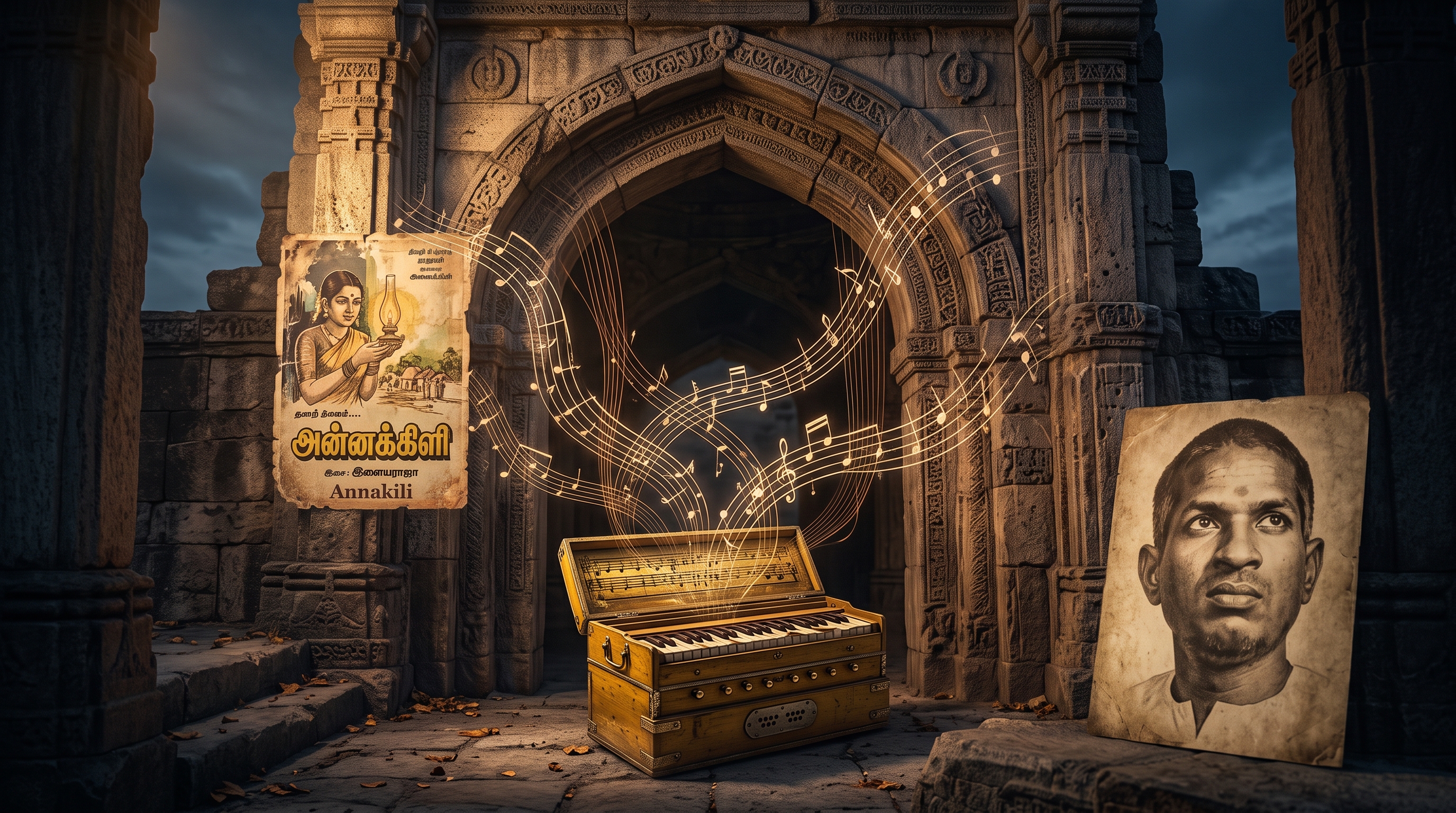
    When his first break arrived in 1976 with Annakili, it did not merely announce a new music composer. It unleashed a tsunami. He took the raw, untamed mud of the village and married it to the wide, arched ceilings of the symphony. Annakili swept the state of Tamil Nadu. It rushed through the streets, the tea shops, and the radios like a sudden, glorious and wet rain. A star was born. When raw, rustic passion takes a rigorous vow to the discipline of learning. something holy happens. Suddenly, the rural Tamil soil and European strings were speaking the same tongue.

    There are sounds that merely fill the air, and then there is what Ilaiyaraja does. For fifty golden years of sunlight and rain, his melodies have been the faithful companions to my deepest sorrows, my quietest joys, and everything in the long stretch between being young and being on that runway to old age and oblivion I find myself today. I didn’t know that letting a ‘Raja Sir’ composition take hold of me was to surrender to a memory I held in my veins.

    Here’s a tribute to a few of my favorite songs. I could easily write a hundred of these.

    Poove Sempoove

    Listening to this song today at my age and where I find myself in life, I feel the shivering fragility of a midnight heartbreak. The song does not demand your attention. No. Instead, it washes over you like a warm and gentle tide. The electric hum of the modern instruments, the gentle finger picking of an acoustic guitar, married to the aching breath of a flute build a space as vast as the night sky and as intimate as the stars. Anchored by K.J. Yesudas’s velvety voice – sounding like dark honey and old wood – the melody slithers right past your defenses. It promises a profound, settling peace and yet leaves an unmistakable pang of a heavy, unsaid grief in the heart. The words do not layer on top of the music. They melt right into it. It is a song that calls up the ghosts of regrets, and the sweet sting of goodbyes. It’s a masterclass in subtlety. For those hours when the world is quiet, and you just want to sit in the silence and let the music do the weeping for you.

    Rasathi Unna

    If Poove Sempoove is a quiet night under starry skies, then Rasathi Unna is the sun-baked red dirt of a village road. It strips away every ounce of studio sheen to hand you something undeniably primal, rustic, and bleeding. A solitary, mournful string and the steady, thudding heartbeat of a hide drum carry all the emotional weight. And when P. Jayachandran’s voice enters the air, it sounds bone-tired, broken open, and utterly honest. It’s the voice of a man who has lived through a loss, singing his grief out to the empty fields. It is desperate and earthy, a plea to a beloved, stripped of prettiness, and adorned only by the raw dialect of an ordinary man nursing an inconsolable sorrow.

    Ilaya Nila

    Then there is the irrepressible strut of Ilaya Nila. A track that bustles with a wholly different kind of fire. Right out of the gate, it grabs you with a galloping electric guitar, strummed by hands that know the secrets of the string and the fret. Ilaiyaraja performs a kind of magic here, taking the deep, walking stride of a jazz bassline and fusing it with the rhythms of the old melodies we carry in our bloodlines. A sound that chugs along splendidly, forward and unbothered. Floating above it all is SPB. His vocals smooth, satisfied, alive with the reckless, arrogant beauty of being young, summoning the gorgeous, foolish optimism of a misspent youth. It sounded perfect to me as a college boy. And it sounds perfect to me now.

    Inraikku En Indha Anandhamey

    Imagine sunshine being reborn as music. The song bursts forth like the sun coming out from behind the clouds after a long drought. A dizzying rush of joy, set in Abhogi ragam, driven by bright rhythms that catch you unawares and carry your stumbling heart into unexpected grace.

    Janani Janani

    And then, there is Janani Janani.

    This is the song Ilayaraja was born to compose. It is the song he was born to sing. If his body of work is a sprawling country, this song is the quiet, beating heart at its center. It feels less composed and more like a prayer. Stripped of all vanity, it is a profound exploration of devotion and life itself. In its haunting, deeply spiritual resonance, Janani Janani holds Ilaiyaraja’s soul. His capacity for faith and a reverence for the life force that music provides.

    The Echoes We Carry

    Raja gives us this world. And he makes us want to give it back. His songs make us want to sing them aloud. Never mind that the throat catches, that there is no way on God’s green earth we can scale those high notes only SPB or Chitra could summon with such ease. We pull the melodies toward us anyway, demanding they be shared with our favorite people. Whether on late-night car rides under amber streetlights or with family in the living room.

    Because singing together, even with a cracked voice and the missing note, is one of the purest ways we can tell someone how much they mean to us. Singing carries no pretense and needs no justification. It is a way of saying: Here I am. My voice may be imperfect, but my affection for you is not. Music is a language stripped bare, a way of stepping outside ourselves to prove that art and beauty are larger than our mundane burdens, a pure, uncomplicated gift that we hand back and forth in the light of our love.

    The Journey Continues

    Today, at eighty-two years old, the maestro remains a force of nature. Fifty years behind him, an entire universe created, and he is still writing, composing and singing. The river keeps moving, deep and unbothered by time.

    Thank you, Raja Sir. For building the house. For giving our souls a language they can understand. Here’s to the next 50 years.
  • One Deep River by Mark Knopfler

    One Deep River by Mark Knopfler

    Listening to Knopfler’s latest, it struck me how much he has mellowed over the years, and I hadn’t noticed. “One Deep River” is an unmistakable reminder of greatness that has aged like smoky, vintage wine. This album is not for those who expect the exhilarating licks that distinguished Dire Straits albums. Rather it’s for those of us who have put away faded Dire Straits tee shirts somewhere in the back drawer and have grown with the pensive guitar maestro who went solo 33 years ago.

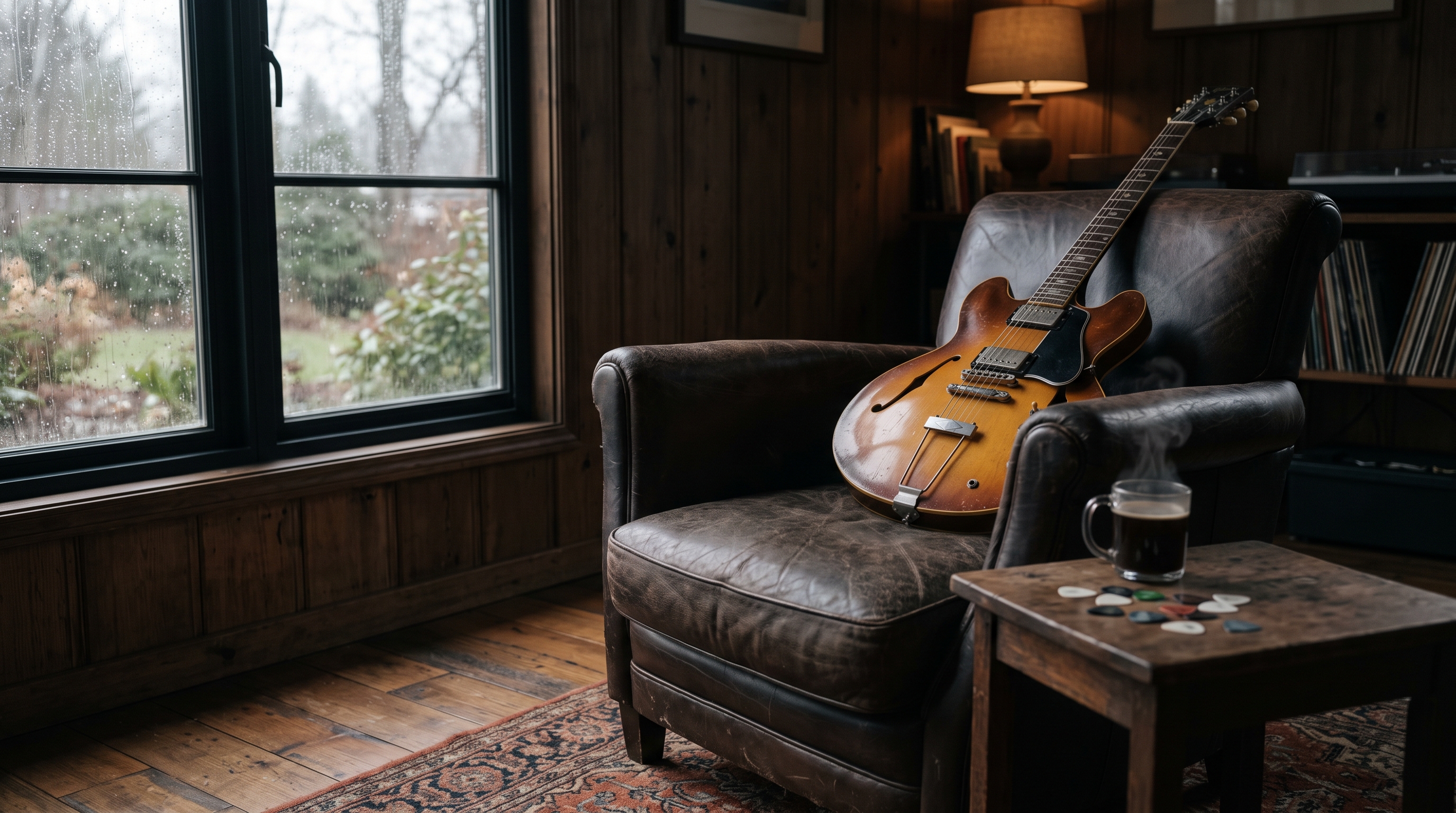
    The first song “Two Pairs of Hands” is a banger. It has the typical nonchalant strum of a man who knows his way around his Gibson Les Paul guitar. It bustles with energetic conga beats as Knopfler’s guitar slithers in and through and around them.

    There’s the breezy “Smart Money,” and the bluesy “Scavenger’s yard.” The album chugs along splendidly for eight or nine ballads after that, each warm and meditative in its own way, loaded with tales of regular folks beaten down by life.

    Knopfler’s voice sounds mellower, and contented, and maybe even a little tired. It’s the voice of a man who has lived a full life and seen things and has something to say. In a haunting melody, he sings about people watching slave traders in their midst while they go about their business, as evil and pain abound around them. “It won’t end well for anyone,” he warns us in a world-weary voice.

    Knopfler’s long-time accompanists include producer Guy Fletcher, guitarist Richard Bennett, pianist Jim Cox, percussionist Danny Cummings and bassist Glenn Worf. Greg Leisz who joins them on this album supplies the sounds of a pedal steel guitar, which adds a measure of melancholy.

    The closing tune “One Deep River,” is another relaxed and meticulously crafted tune, evocative of the song “Brothers in Arms,” from yesteryears. Like all the other songs, it’s talk-sung in his deep and gravelly voice with a mixture of hope and resignation. If you’re looking for a soft Sunday morning vibe and want to keep the mood mellow, this one’s for you.

    There is nothing lively like the “Walk of life,” or “Twisting by the pool,” but you could easily get lost in the masterful story telling or the pathos of the accompanying instrumental sounds. The album sounds gorgeous and warm and evokes in me, for an inexplicable reason, dormant memories of a misspent youth. Mark Knopfler isn’t trying to do anything special with this album. As he says in one of the songs, he’s “staying just ahead of the game.”

  • Dancing Queen by ABBA

    Dancing Queen by ABBA

    There are only two types of wedding discos. The ones that start with Dancing Queen, and the bad ones.

    The song is catchy, evocative, euphoric and perfectly encapsulates the carefree bliss of being young. Like all great pop songs, it has an alluring first line. “Friday night and the lights are low..” Boom! We’re hooked right away and can’t wait to hear more.

    Indeed, the song starts with a bang, after that initial piano roll, that astonishes us and catapults us right into the middle of the chorus! The band knew they had struck gold before it finished. Frida Lyngstad, the lead singer said later, “I cried out of pure happiness that I would get to sing that song, which is the absolutely the best song Abba have ever done.” No wonder it’s a wedding staple.

    The song evokes images of a seventeen year old girl on a nightclub dance floor, enthralled by the music and lost in the moment. The sonic euphoria reminds us of the freedom that lies on the dance floor, and simultaneously embeds in it what can only be described as a certain Nordic melancholy. The narrator is not the girl herself, but an observer who could be any of us. Rather than drag us into the despair of nostalgia, the song firmly establishes us in the glory of this very moment that is now for four exhilarating minutes.

    Making the song about a teenage girl on the dance floor may seem unnecessarily dramatic but there is something to be said about dedicating a whole song to a girl wanting to dance without corrupting it with romance and love and other such things.

    Dancing Queen may be about a seventeen-year-old girl but it transcends age and gender, and effortlessly translates its joy across generations. It’s very conceivable that an 89-year-old grandfather might get up from his chair to dance at a wedding exclaiming, “That was our song!” Even Queen Elizabeth II (rest in peace) was extremely fond of dancing to the song. “I am the Queen, and I like to dance.” This is what people do when they hear it. They surrender to its abandon.

    May it live forever in our lives. For as long as it calls to us, we know that we still have joy left in our hearts and that this amazing world that we find ourselves in will be okay no matter what happens tomorrow. 

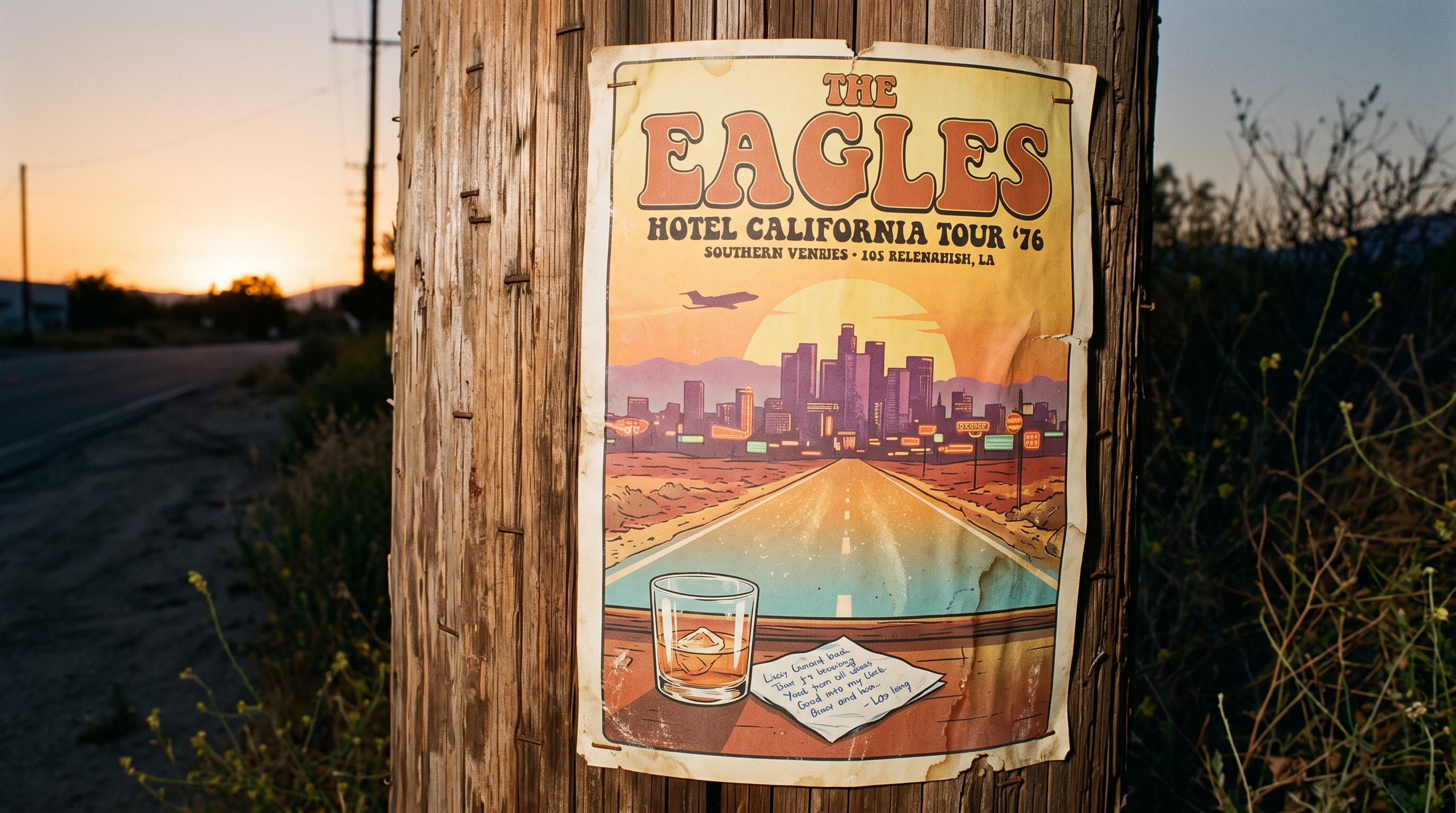
  • City Girls and Desert Highways: How the Eagles Beat Father Time

    City Girls and Desert Highways: How the Eagles Beat Father Time

    Time, as we have come to understand it, is a shimmering mirage. Paul Rudd is older than Ted Cruz and Taylor Swift is only a year younger than Adele. Rock and roll’s relationship with Father Time is equally fascinating. Men and women barely into their twenties, dewy young people with nary a mark on them write soulful ballads with shattering maturity. And they grow old, and it all comes true.

    By the time the Eagles released Hotel California, they were knee-deep in experience.
    Ankle-deep, at any rate. The Southern California sound, which they had helped invent, ruled the airwaves. Mildly rocking, beautifully harmonizing, with silvery sleek songs, the Eagles found the elixir. Their previous album, Greatest Hits (1971-1975), was a behemoth. It would go on to be the biggest-selling U.S. album of the 20th century.

    Hotel California is in some ways asshole music, an introspection from the window of a Learjet. But it’s also self-aware, and wonderfully crafted, and superbly exquisite in places. It is of its time. It drips with foreknowledge. The weird breeze, the mirrors on the ceiling? We are all just prisoners here, of our own device. Luxury gone rotten, an approaching storm. From his gold-plated heyday Don Henley somehow glimpsed it. He smelled it. And you know what, it’s still there. This Hotel California, this shimmering American palace of God-knows-what, is still our future.

    The 1970s was the decade when country music went Californian, and the Eagles became the platinum-selling soundtrack to the west coast generation. When they released One of these Nights in the summer of 1975, that album brought them to a whole other level of success. It was their first LP to reach Number One on the Billboard album chart, and the singles were all over the radio. “Lyin’ Eyes” was written by Don Henley and Glenn Frey one night when they saw a young couple talking and imagined they were in the middle of a secret affair. “We saw a lot of beautiful women around Hollywood who were married to wealthy, successful men, and wondered if they were unhappy,” Frey said. “One night we were drinking in a bar when I spotted this stunning young woman. Two steps behind her was a much older, fat, rich guy. We all started laughing and one of the other guys commented, ‘Look at her, she can’t even hide those lyin’ eyes!’ Immediately, we all began grabbing for cocktail napkins to write down lyrics to go with that great observation.”

    The song’s deeply resonant opening, “City girls just seem to find out early,” took six different tries. The tune, produced by Bill Szymczyk, also features Henley on backing vocals, Bernie Leadon on lead guitar, mandolin and backing vocals, Don Felder on acoustic guitar, Randy Meisner on bass guitar and Jim Ed Norman on piano.

    “As the saying goes, Henley could sing the phone book and make it sound interesting, but Glenn was a great storyteller,” Leadon told Rolling Stone. “Just listen to the way he sings ‘Lyin’ Eyes’.”

    That attention to detail paid off. Not only was “Lyin’ Eyes” a hit on mainstream and country radio, but it also earned the group a Grammy Award for Best Pop Vocal Performance by a Duo, Group or Chorus and a nomination for Record of the Year. The song is the only one on the One of These Nights album that sees Frey singing solo. The Eagles would never again reach such heights with country listeners, mainly because they were moving toward a more rock-focused approach. Their next crossover Top 40 hit didn’t arrive until 2007, with “How Long.”

    ‘It won’t be bound in leather books and handed down from generation to generation,’ said Don Felder, talking about the band’s music in 1975. He was so wrong.

  • Review: Take it Easy by the Eagles

    Review: Take it Easy by the Eagles

    I’m just going to come right out and say it. Take it Easy by the Eagles is my all-time favorite rock song ever. The thing is it’s not even classic rock but is forged in the quintessential country-rock style of the Eagles in their early years.

    In 1972, Bud Scoppa wrote in the Rolling Stone magazine that the song “is simply the best sounding rock single to come out so far this year.” The first time through, you can tell that it has everything: danceable rhythm, catchy with a winding melody, intelligent, affirmative lyrics, a progressively powerful arrangement mixing electric guitar and banjo, and above all, a cracking crisp vocal, with vibrant four-part harmony at just the right moments for maximum dramatic effect. To top it off, it was co-written by a non-Eagle (Jackson Browne) with Glenn Frey, their lead singer.

    As lore has it, Browne started writing the song with the intent of cutting it on his eponymously titled 1972 debut album. But he hit a roadblock as writers do every so often. Enter Glenn Frey, a neighbor of Browne and the lead singer for the Eagles who finished Browne’s legendary opening words, “I’m standing on the corner of Winslow, Arizona …” with, “such a fine sight to see. It’s a girl, my lord, in a flatbed Ford, slowin’ down to take a look at me.” One of the greatest rock songs was thus born.

    Take it Easy went on to become The Eagles’ first single in May 1972 and appeared a month later, on the band’s self-titled debut. It features the tight harmonies fans would come to expect from the band, with Don Henley and Randy Meisner swapping harmony vocals and Bernie Leadon providing that distinct banjo accompaniment.

    Immediately on arrival, it captured the imagination of listeners and gently began the process of seducing a troubled world out of its greatest anxieties. The Vietnam war anthems had come and gone. So had the highest-profile victims of drug trips. The protest movement was losing its momentum. The 1960s were well and truly over. The arrival of Take it Easy announced it definitively.

    Here was counterculture suggesting another way to view the troubled world. Instead of clamorous protests and feisty slogans, the song soothes and reminds us, “Don’t let the sound of your own wheels drive you crazy.” Go the other way and take it easy, and everything will ultimately be fine. Perhaps apt advice for today’s world torn apart by demagoguery and war and protests. Perhaps we should submit instead to the sound of those gorgeous harmonies. You don’t even have to make a move. Happiness is but a flat-bed Ford away.

    Ironically the band itself failed to take their own advice. When the Eagles split up acrimoniously many years later, Glen Frey was asked if they would ever get back together again, and he famously replied, “When hell freezes over.”

    The song became so associated with Frey and the Eagles that it did not spawn too many covers. In a twist of fate, Travis Tritt, a country music singer, re-united the Eagles, who by 1993, had been broken up for 13 years and invited them to sing on his cover of Take it Easy. They had so much fun recording it that they decided to loosen their load and get back together. Their reunion tour was aptly christened, “When Hell Freezes Over.”

    As for Winslow, Arizona, the city near Flagstaff foresaw the rise of selfies and Instagram-friendly destinations with the 1999 unveiling of the Standin’ on The Corner Park. Winslow seemed to give its citizens and visitors, a gentle message: weren’t they heroes too, those denim-clad troubadours, who counseled us to turn life’s dial down a notch or two? What could be more profound than that.

    We may lose and we may win. But we will never be here again. So open up, my friends, I’m climbin’ in.