It’s five in the morning, and I’m standing outside the hotel, chatting with Luka, the man in charge of the front desk. I think he’s in his late 30s, but I don’t ask. He’s been working the late shift, and he’s chatty. He used to live in Zagreb (“much cheaper than Split”) and worked in a hospital. “I’m an engineer. Healthcare not doing so well in Croatia now.” And then life happened, and he moved here to Split, where he works three jobs. One of them is as a security guard in a store for one of the top electronics chains in Croatia.
We talk about the wars. The ones in Ukraine and Iran. “We know war in Croatia,” Luka speaks in a soft and measured voice. “Wars are not good, except for some people.”
Our conversation shifts to AI. “It’s good in some things. Mainly bad. It’s going in the wrong direction,” he says, taking a deep drag on his cigarette and exhaling slowly into the pre-dawn air. “They’re using robots to replace me. I have three kids. I work three jobs. I don’t have any savings. I have given up. Maybe I’ll move back to Zagreb.”
Later, Paul is guiding us around Fort Klis and Salona, the old capital of the Roman province. He’s a tall, strapping young lad in his twenties with an upbeat take. “My grandfather left for Germany. In the old days, we had communism. It was a crime to start a business. Now I can start my own business. Capitalism is good.” I listen to him in silence. He’s new to the religion and I can appreciate his zeal.
We have a spirited conversation about the Catholicism of Croatia. In the 11th century, the Slavs — the peoples of Serbia, Croatia, Bosnia, and other small kingdoms on this side of the Adriatic — made some choices. Some like Serbia went with the Eastern Orthodox church. Others, like Croatia, went with the Pope and Roman Catholicism. Later, Bosnia turned to Islam under Ottoman influence. Centuries later, these choices would reverberate after Marshal Tito died and the country once known as Yugoslavia disintegrated. The Croats and the Bosniaks bore the brunt of the sectarian warfare that tore apart peoples once united by a common linguistic and cultural heritage.
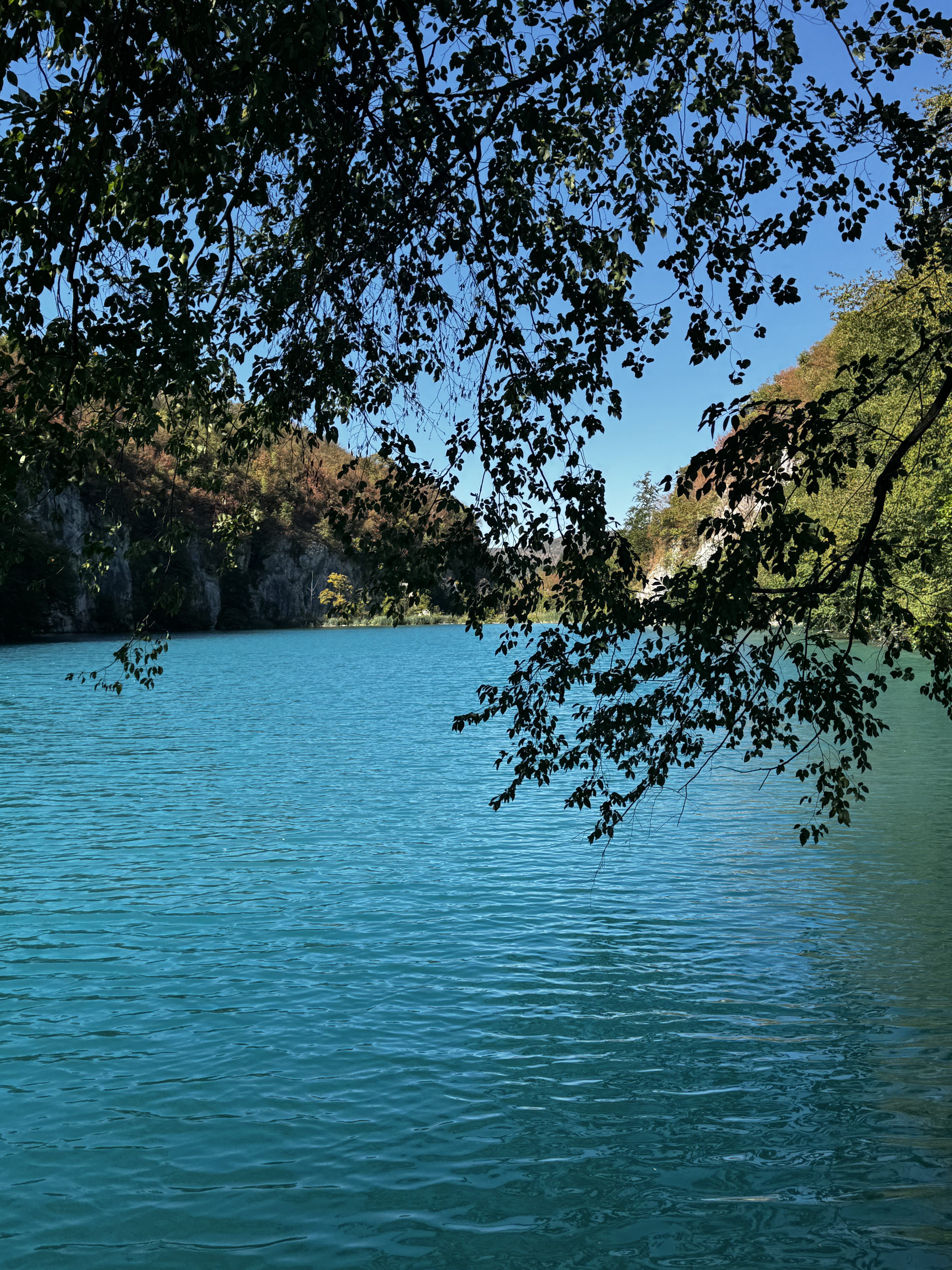
At one point, Paul asks me a question. What are a bunch of brown people from California doing in a place like this? Why Croatia? Well, he doesn’t quite phrase it that way. And he knows the answer already: Game of Thrones. No one has done more for the Croatian economy than HBO. Split and Dubrovnik are sites of the most iconic scenes from George R.R. Martin’s gritty political thriller. Millions from all over the world, like me, come here to walk the street alleys, the dungeons, and the ramparts. It’s their homage to one of the most memorable television dramas of our time. They come for the show and stay for the other things Croatia has to offer. Like Plitvice National Park, which is stunning. And Trogir, a chill beachside town.
Paul is right, of course. Capitalism unleashes all the right kinds of creative spirits. I should know. I benefited from it. Capitalism is good. Until it stops working. If we compared the best versions of capitalism and socialism, both functioning at their peak, capitalism would win by a long mile. But when you compare their worst versions, both dysfunctional and dystopian, I can see why socialism starts to look more attractive to folks like Luka. To everything there is a season.
First it was Covid. Then, the wars. Now, AI. It’s taking a collective toll on us, not just financially but mentally. I think we are psychologically broken. There’s a feeling of helplessness and resignation in the air. I hate to sound like a broken record, but this story is repeating itself all over the world. The young are giving up. I heard this in Seville from a young woman, our tour guide. After finishing college, she struggled to find a job and finally took to tourism (“I needn’t have attended college for this.”). I’ve heard this in Lisbon, Rome, Chennai, and every other metropolitan city in the last few years.
The winds of change are blowing around the world. I felt it yesterday as I stood on Marjan Hill, staring out at the Adriatic.
My mind drifts back to the early morning darkness. The first ray of sun emerges faintly. We stand in silence for a few minutes.
Luka looks like a capable guy. He’ll figure it out, I tell myself.
“It will be what it will be,” Luka breaks the silence as we go back inside.
Amen.
Leave a Reply